Cost–benefit, what cost?
How do you appraise intangible benefits, whose knowledge counts?


Knowledge takes many forms, but not all of them are considered equal, writes Pounamu Jade Aikman in this extract from Whose Knowledge Counts?
"Whether in hīkoi to parliament or at the polytech at dawn, we’re too unruly, too joyfully inconsistent, to fit the market’s mould. As long as we measure the worth of health and education in purely financial terms, we will always see programmes like school lunches as inherent liabilities, not long-term investments."
"But what does happen when we let market reason decide what is reasonable? That’s what’s most unsettling of all. Feeding our tamariki lunch at schools may never pass the cost-benefit test, because an exclusively market-driven appraisal is anchored in money, not manaaki."
Whose knowledge counts? | E-Tangata
“Feeding our tamariki lunch at schools may never pass the cost-benefit test, because an exclusively market-driven appraisal is anchored in money, not manaaki.” — Dr Pounamu Jade Aikman, in his book ‘Whose Knowledge Counts? From Warp Drive to Waka Huia.’
 Pounamu Jade Aikman

Updated 19/10/2026:
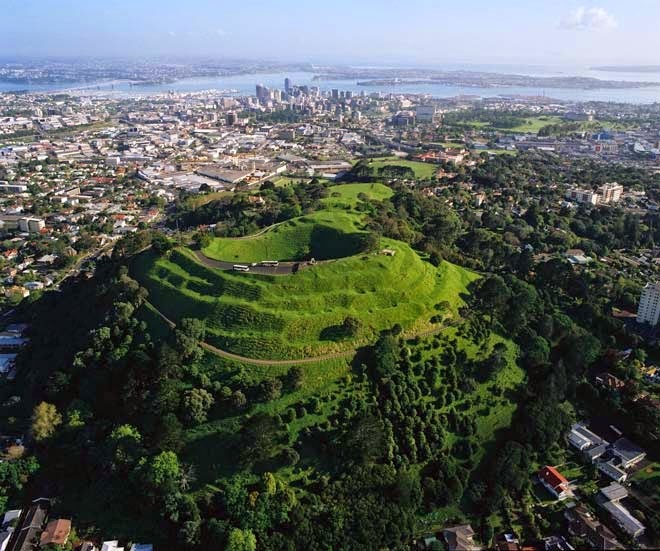
This article also looks at the value of a mountain versus the economic cost of viewshafts:
"The economic argument presented in the report is that while the maunga themselves have deep cultural and civic significance to Māori, the strict boundaries of their view shafts are causing an extreme multibillion-pound drag on Auckland’s economy.
The report then attempts to reduce the irreplaceable cultural, historical, and visual heritage of the maunga in Tāmaki Makaurau to a raw dollar figure.
It’s an extraordinary exercise in administrative hubris.
Applying a generic economic model to these maunga is the regulatory equivalent of calculating the commercial real estate value of the Parthenon."
What happens when the minister for housing is also attorney general? | E-Tangata
“Applying a generic economic model to these maunga is the regulatory equivalent of calculating the commercial real estate value of the Parthenon.” — Nicola Hoobin.
 Nicola Hoobin